
CNC Turning
CNC Turning
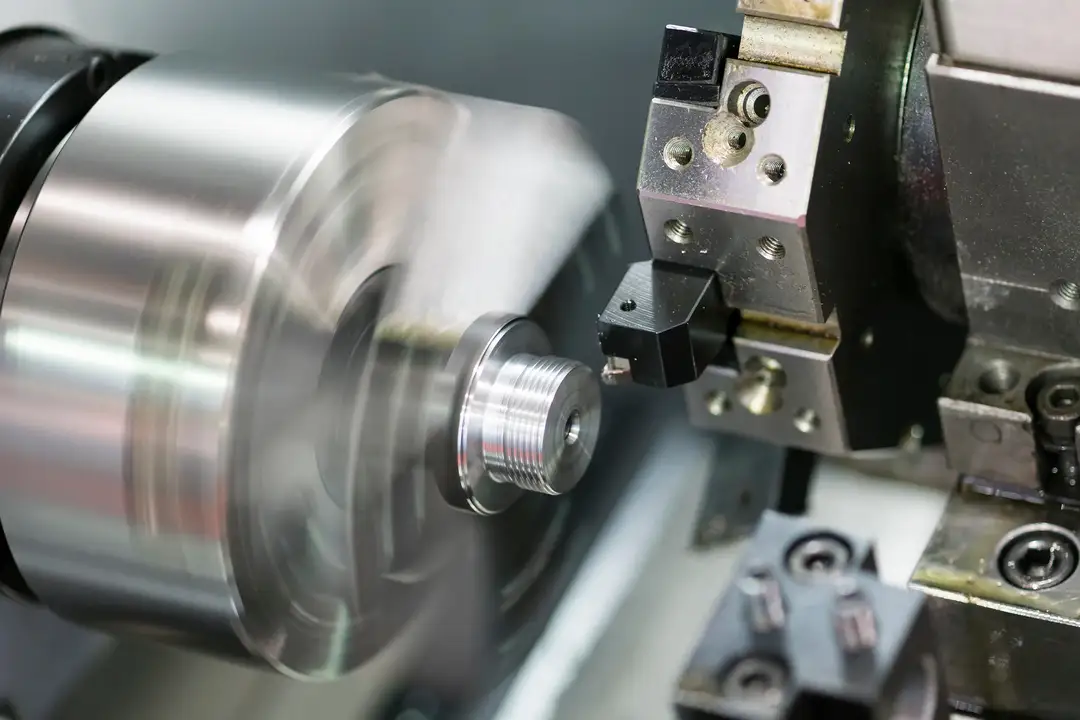
CNC turning is used to manufacture cylindrical and rotational components by rotating the workpiece while cutting tools remove material to create the desired geometry. CNC turning can produce features such as grooves, threads, tapers, bores, knurls, and other precision diameters. LeanWerks uses advanced CNC turning and mill-turn machining to produce complex precision turned components for aerospace, defense, nuclear, and industrial applications. By combining turning and milling in one machine, we reduce setups, improve accuracy, and shorten lead times.
LeanWerks is the leader of lean manufacturing in Utah, providing some of the most precise parts for a variety of industries. With our engineering-based approach to machining, we see the bigger picture when creating even the smallest part in a large aircraft, tank, or industrial machine. CNC turning is just one of many capabilities.
Types Of Turning Machines
There are two primary types of CNC turning machines: vertical turning centers and horizontal turning centers. Vertical turning machines are typically used for larger diameter parts where the part weight can be supported vertically. Horizontal turning centers are more common and are used for a wide range of precision turned components. Horizontal turning typically provides better chip control and surface finish for many applications. LeanWerks utilizes advanced horizontal turning centers and mill-turn machines to produce complex turned and milled components in a single setup.
Mill Turning
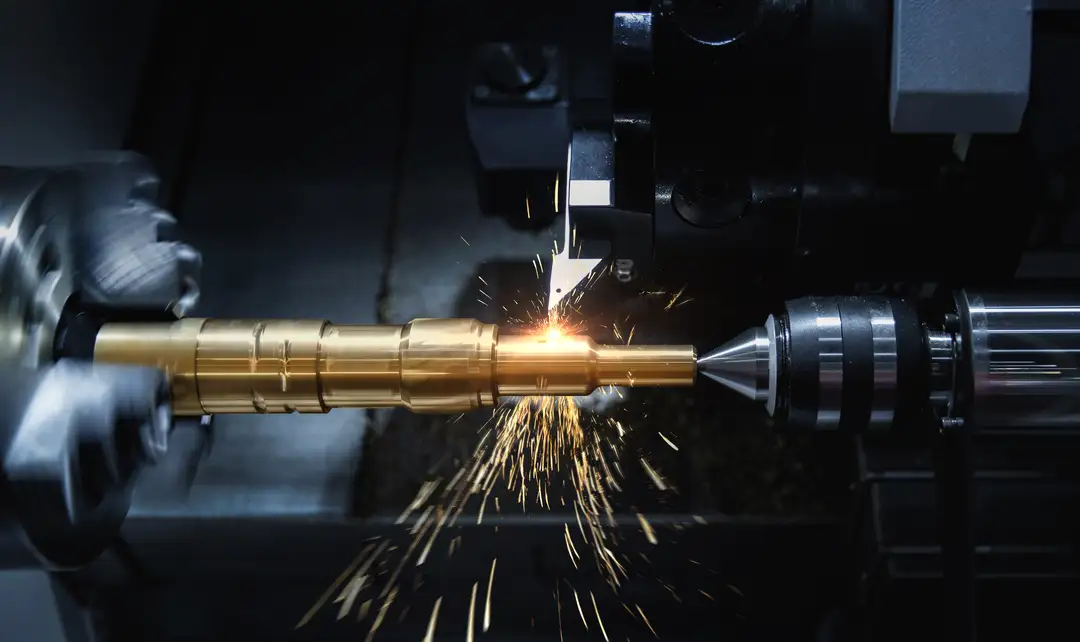
Mill-turn machining combines CNC turning and CNC milling into one machine, allowing complex parts to be manufactured in fewer setups. This improves accuracy, reduces lead time, and lowers manufacturing cost. Mill-turn machining is commonly used for aerospace components, hydraulic components, valve components, and complex precision-machined parts requiring multiple operations.
Get Your Free Quote
made in the usa
precision machining
Multitasking
Multitasking machining combines turning, milling, drilling, tapping, and other operations in one machine. This reduces setup time, improves accuracy, and allows complex parts to be manufactured more efficiently. LeanWerks uses advanced multitasking CNC machines to reduce cycle times and improve quality when manufacturing complex aerospace, defense, nuclear, and industrial components requiring tight tolerances and multiple machining operations.
The LeanWerks Difference
LeanWerks combines skilled machinists, strong engineering support, advanced CNC machining equipment, and lean manufacturing processes to deliver high-precision machined components with reliable quality and competitive lead times. We invest heavily in training, process engineering, and advanced machining technology so we can manufacture complex parts that many machine shops cannot produce efficiently. Our goal is not just to machine parts — it is to engineer manufacturing processes that improve quality, reduce cost, and reliably deliver precision-machined components and assemblies for demanding industries.
By employing multi-pallet pool systems, we achieve a level of “active readiness” that traditional shops cannot match. This allows us to stage complex, high-priority aerospace jobs alongside recurring defense contracts, maintaining a continuous flow that minimizes idle spindle time and maximizes output. LeanWerks does not want to replace the machinist, but rather limit mundane tasks from our master craftsmen’s plate. We ensure precision and detail in supporting the manufacturing needs of our clients’ ongoing programs.
Frequently Asked Questions
What Is the Difference Between CNC Turning and CNC Milling?
The primary difference between CNC turning and CNC milling is which component rotates
during machining. In CNC turning, the workpiece rotates while a stationary cutting tool removes material to create cylindrical or rotational parts such as shafts, bushings, valve components, and threaded parts. CNC turning is ideal for round or symmetrical components that require tight tolerances and excellent surface finishes.
In CNC milling, the cutting tool rotates while the workpiece remains stationary. CNC milling is used to machine complex shapes, flat surfaces, pockets, slots, and multi-sided parts. Advanced 3-axis, 4-axis, and 5-axis CNC milling machines allow complex aerospace and industrial components to be machined in fewer setups with high accuracy. Many precision-machined parts require both turning and milling operations. Mill-turn and multi-axis machining centers combine these processes into one machine, improving accuracy, reducing lead time, and lowering manufacturing costs.
How Does CNC Turning Achieve High Accuracy?
CNC turning achieves high accuracy through computer-controlled machining, a rigid machine tools, precision tooling, and repeatable machining processes. Modern CNC turning centers can routinely hold tolerances of ±0.001 inches or tighter, depending on the material, geometry, and feature being machined. High accuracy in CNC turning is achieved through:
- Precision CNC machine tools
- Rigid workholding and tooling
- Controlled cutting parameters
- In-process inspection and quality control
- Repeatable machining processes
- Experienced machinists and process engineers
For industries such as aerospace, defense, nuclear, and space, precision and repeatability are critical. Components must meet exact specifications and perform reliably in demanding environments. LeanWerks uses advanced CNC turning equipment, engineered machining processes, and an AS9100-certified quality management system to ensure parts meet all customer and regulatory requirements.