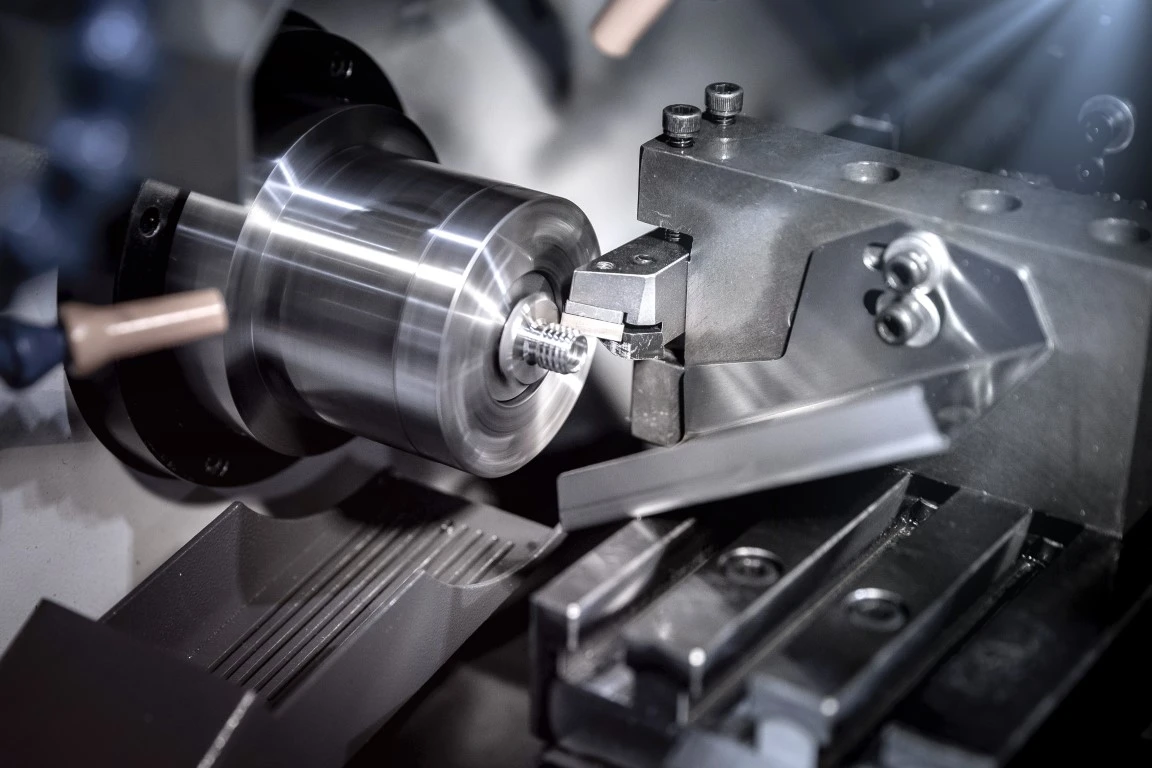
LeanWerks rose to the challenges of this complex jet engine part
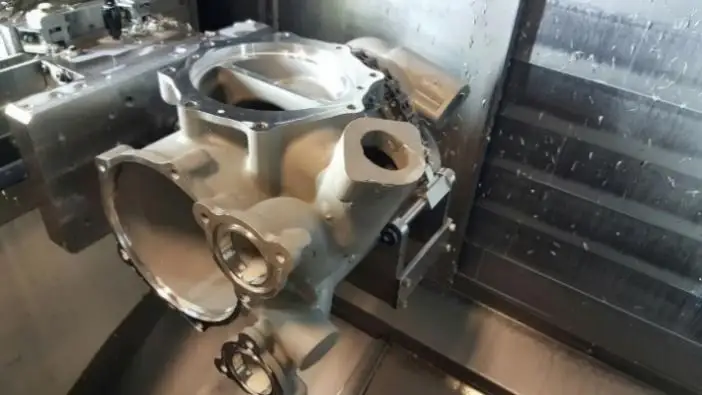
Many shops avoid machining complex castings because of the variability of the beginning form and tricky work-holding requirements. Many design engineers delight in the use of investment castings because they offer intricacy of form with good dimensional precision relative to other casting processes. Despite their relatively good dimensional precision, investment castings still require machining processes to achieve precision fits and function in high performance assemblies.
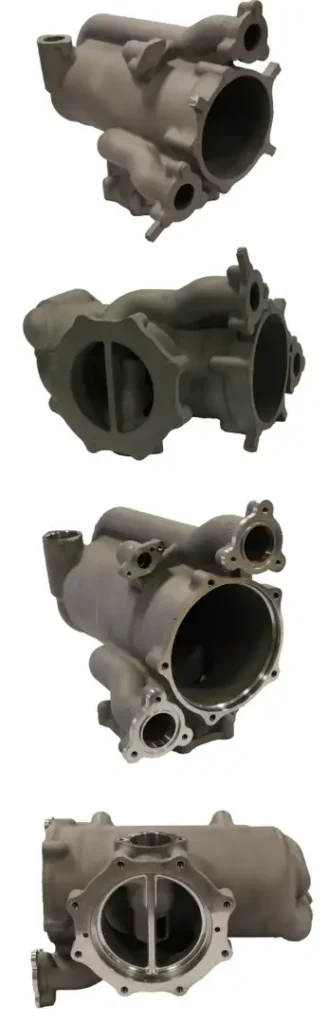
Challenge
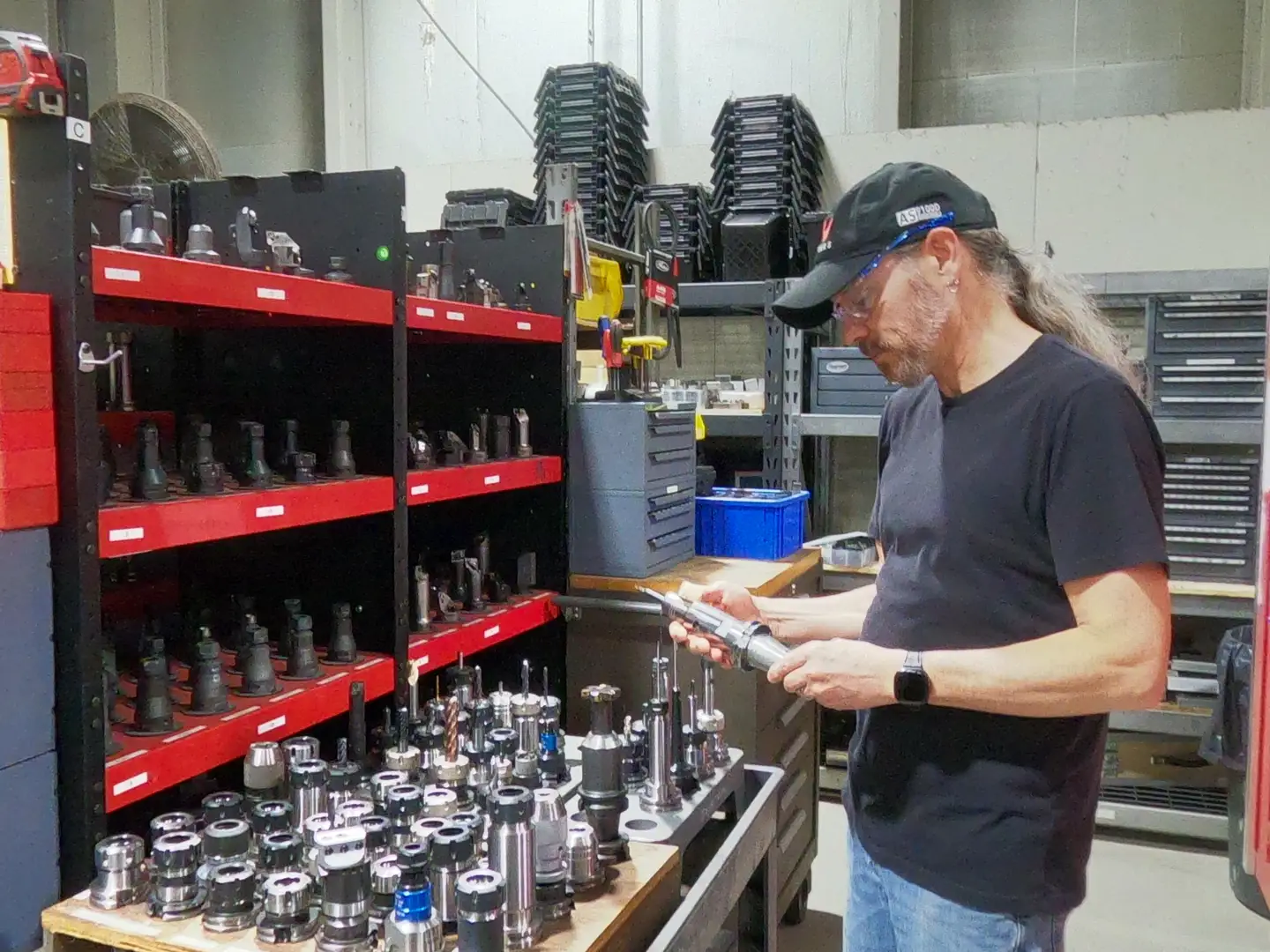
- Material: A356.0 Aluminum. This aircraft grade cast aluminum has a high silica content and can be hard on tools. Tools must have positive high rakes and be run at very high speeds with light cuts.
- Geometry: Multiple features at multiple angles on all faces of this casting are the primary challenge – especially the critical fitting inside the bottom of the 13” deep housing. The complex, thin walled geometry also creates vibration challenges.
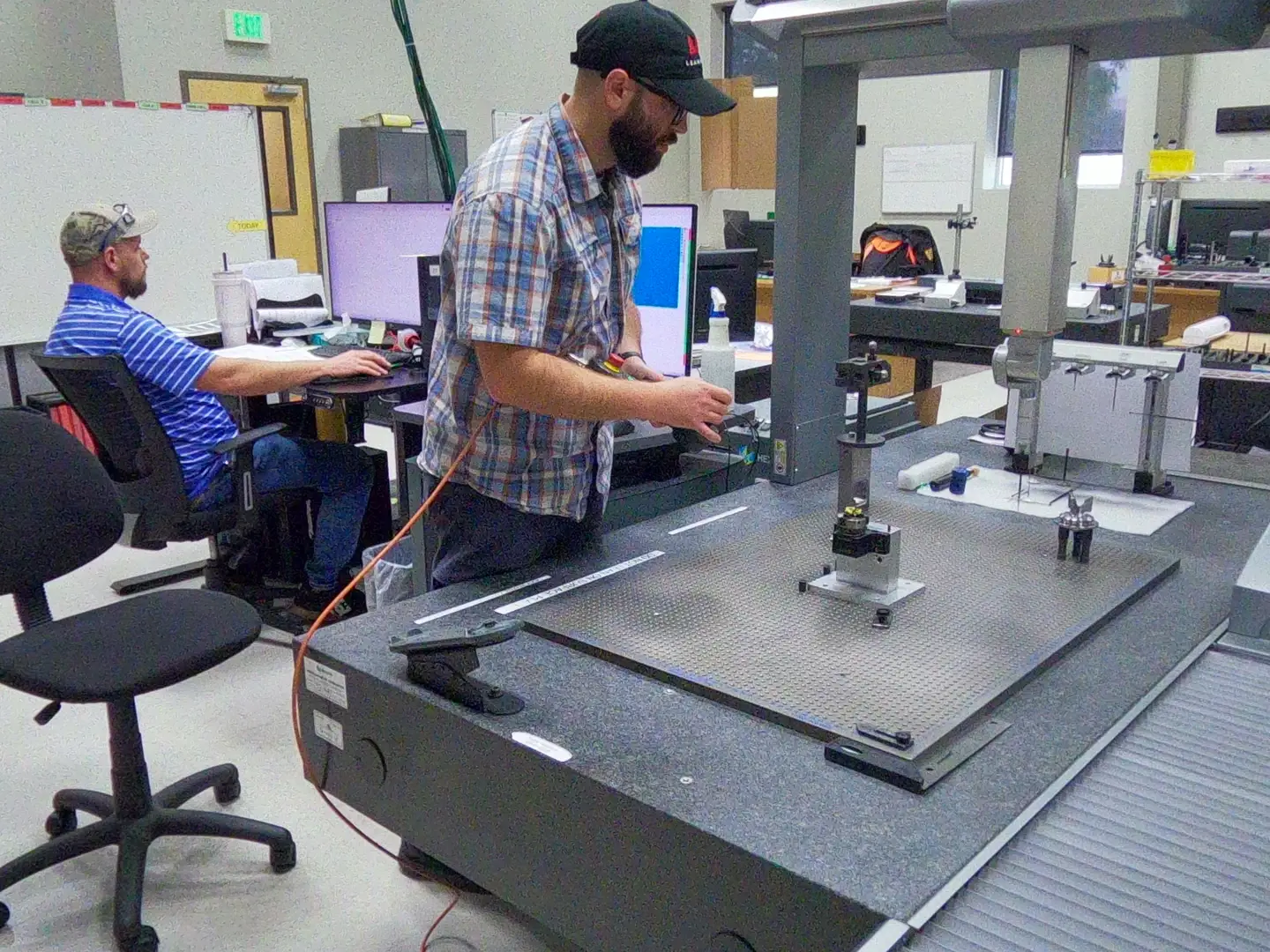
- Tolerances: Complex datum structure along with true positon requirements of .25mm on features separated over the extents of the part present the main tolerance challenge. Other less separated features have size tolerances of +/- .01mm and true position of .05mm.
Solution
“All solutions are simple” – A mantra and an ideal at LeanWerks. Starting with a foundation of great people that include journey level tradespeople and degreed engineers, then strengthened by great processes, LeanWerks develops effective manufacturing plans guided by this simple solutions principle.
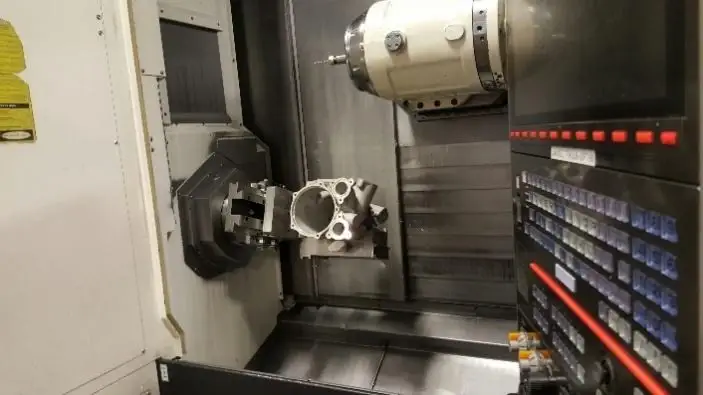
In this case, the key turned out to be a combination of work-holding and on-machine probing. By engineering a fixture that accommodated access to the part from five of six facets, the casting could be machined in one work-hold on a five-axis multi-tasking machine. And, by retrofitting that machine to work with an extended length and standard length probe at the same time, the complex datum structure could be established while the part was in the fixture. In this manner, the toolpath could be best fit to each individual casting and machining completed in one operation. One and done with confidence – simple and effective.
Results
Machined castings that meet specification. That’s the result we expected and achieved. However, the best and completely unanticipated result was that the creativity and resourcefulness required to overcome the challenges this opportunity presented have permeated to other aspects of our operation and exposed opportunities where we did not see any previously. Exploiting those newfound opportunities has resulted in increased operational effectiveness, benefiting LeanWerks and our customers.