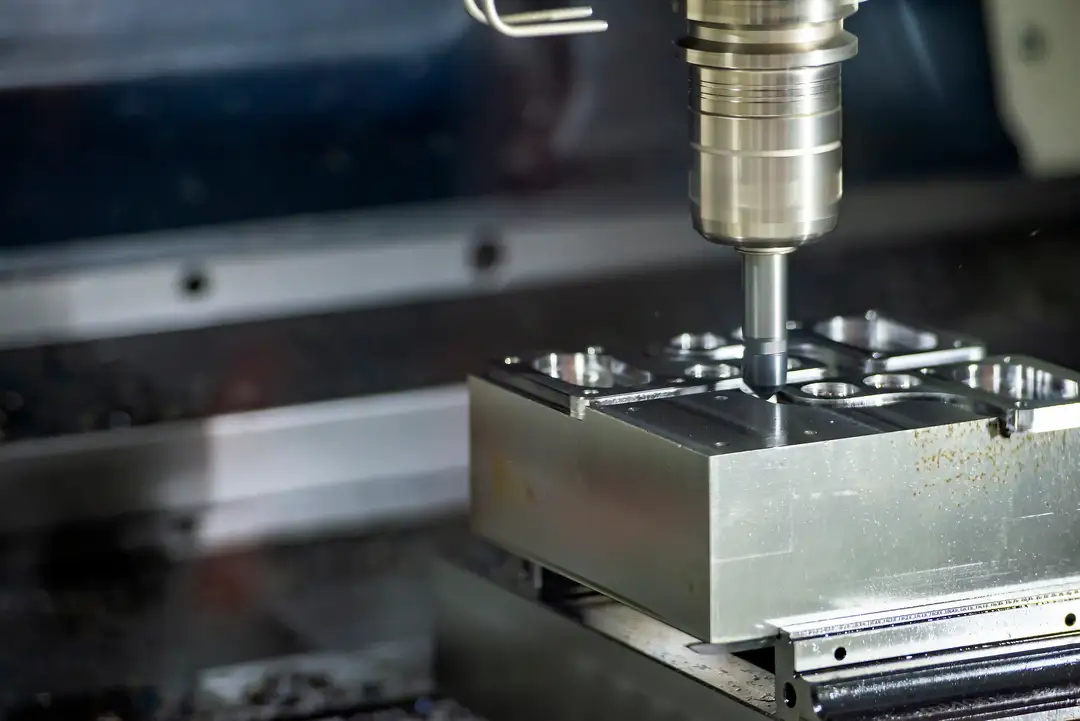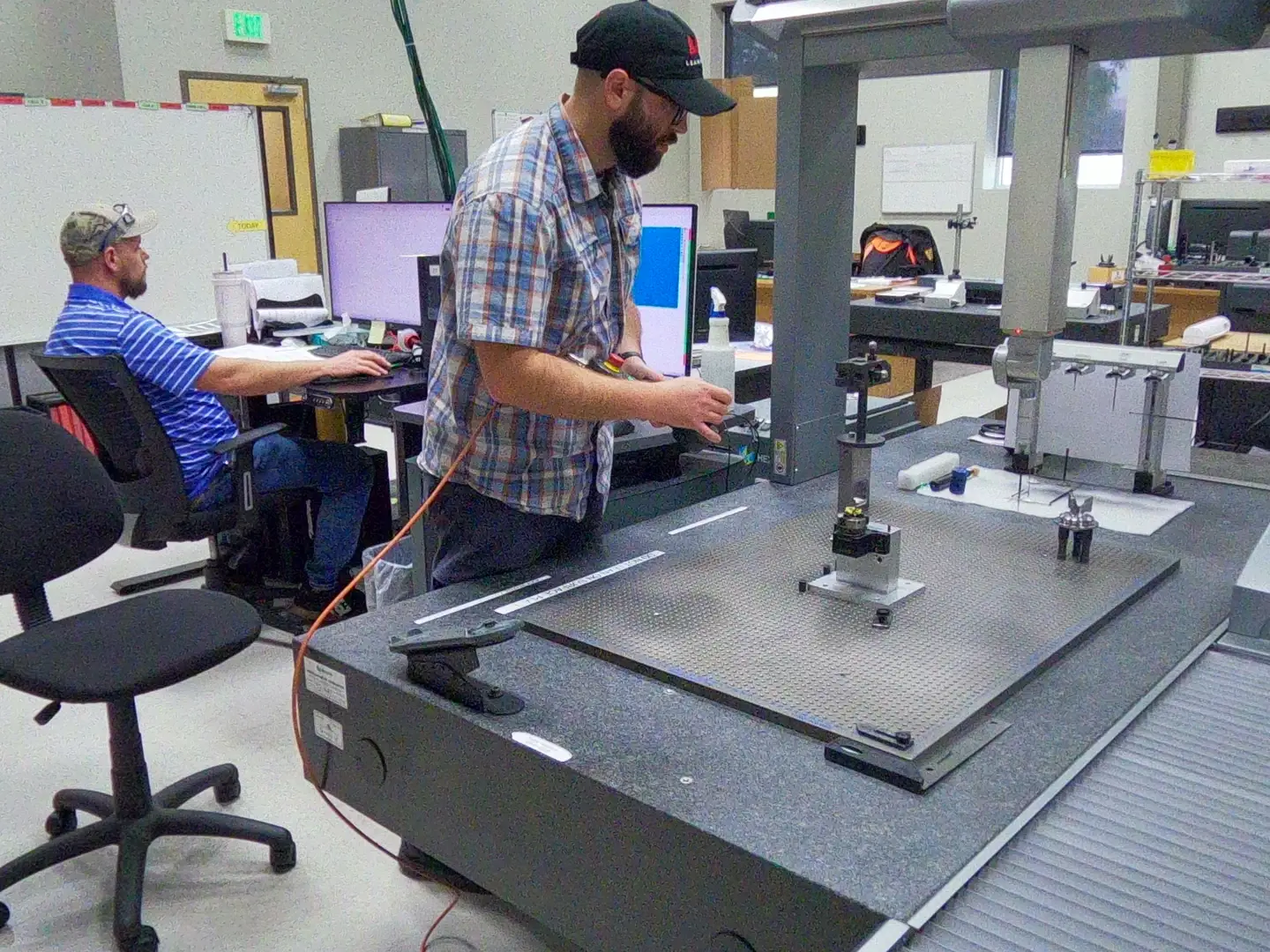
From aerospace investment castings to high-pressure valve components, successful precision machining begins with understanding the entire manufacturing process.
Complex precision-machined components present challenges that cannot always be solved by adding more sophisticated equipment or increasing inspection. Difficult materials, intricate geometries, variable starting conditions, and demanding tolerances require effective manufacturing process engineering.
For aerospace, defense, space, and other high-reliability industries, an acceptable first article is an important milestone. Reliable repeat production also requires a process that maintains quality while controlling cost, throughput, and manufacturing risk.
At LeanWerks, our approach combines experienced machinists, engineering expertise, advanced CNC technology, and disciplined process development. Three projects illustrate how this approach creates practical solutions to difficult production challenges.
Challenge 1: Machining a Complex Inconel Aerospace Casting
Investment castings allow designers to create intricate shapes with relatively little wasted material. Machining them to precision tolerances becomes especially challenging in a nickel-based superalloy such as Inconel 625.
One aerospace component required machining on multiple faces, with internal flatness tighter than 0.001 inch, flange diameters held to ±0.001 inch, and demanding coaxiality and positional requirements. Irregular geometry complicated workholding, while the alloy made tool performance critical.
The Solution: Precision Fixturing and Proactive Tool-Life Management
LeanWerks developed a locating system that remained with the casting through successive operations. Hardened locating bushings, precision pins, and carefully manufactured fixture bases enabled repeatable positioning as the part moved between setups.
The team also established documented tool replacement intervals based on observed performance. In Inconel, excessive tool wear can increase cutting forces, degrade accuracy, and damage components or equipment. Planned replacement helped avoid those failures.
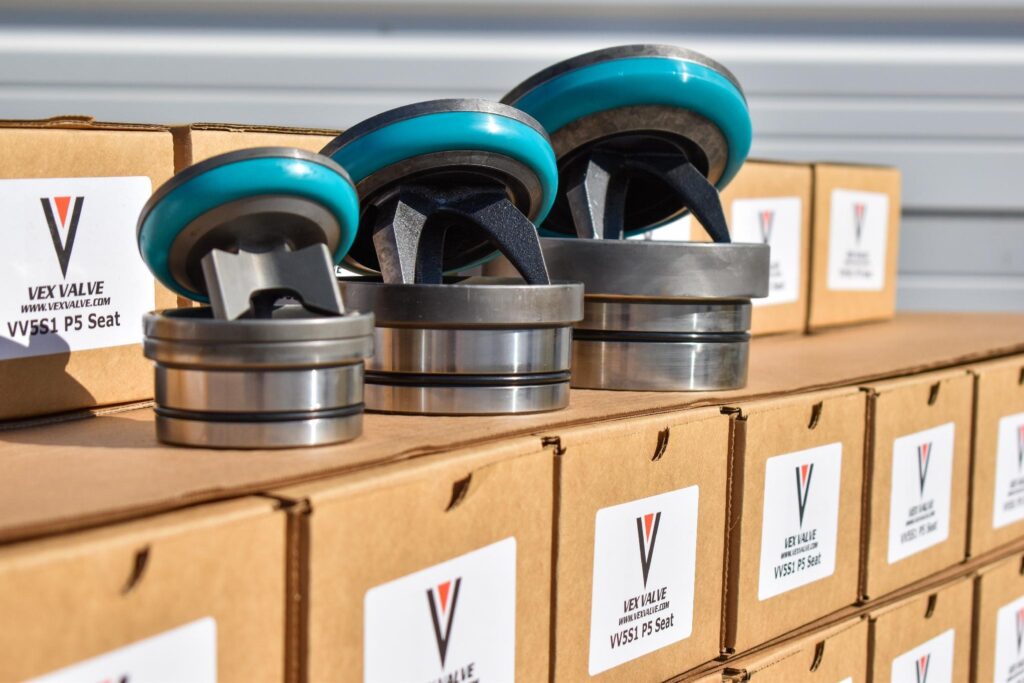
The result: A repeatable process producing conforming components. When demand unexpectedly doubled, established workholding and documented standards supported increased production capacity.
Challenge 2: Five-Axis Machining of a Complex Aluminum Fuel Filter Housing
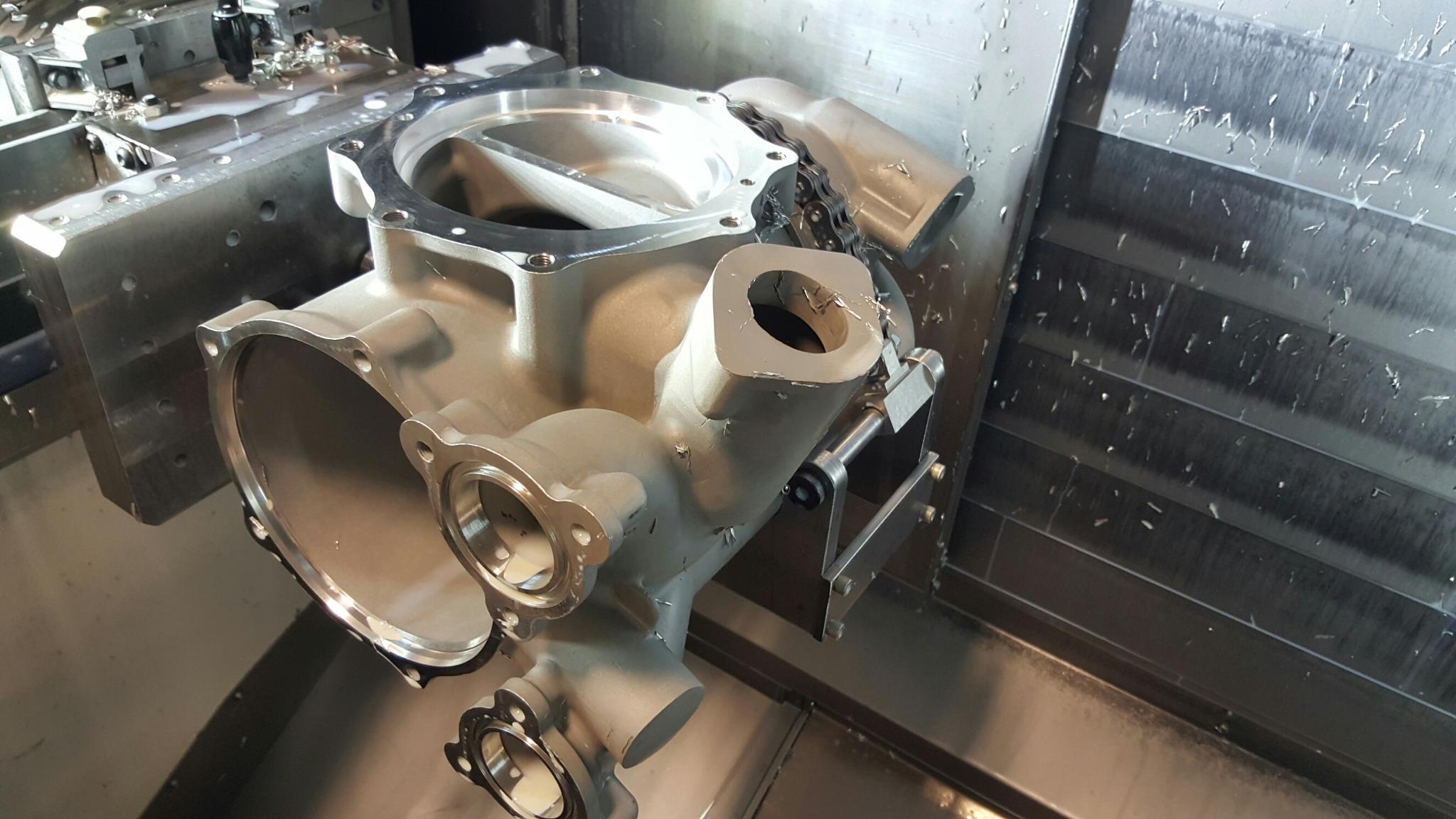
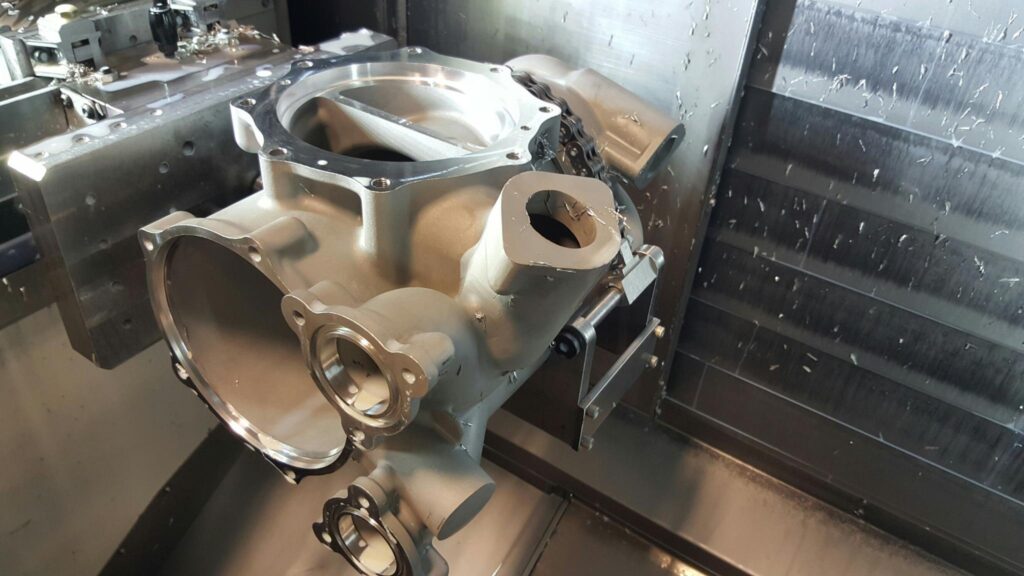
Another aerospace project involved an A356.0 aluminum investment casting with thin walls, complex internal geometry, and critical features deep inside a roughly 13-inch housing. Selected features required dimensional tolerances of ±0.01 mm and positional tolerances as tight as 0.05 mm.
The central challenge was maintaining geometric relationships across widely separated features while accounting for variation in incoming castings.
The Solution: Engineered Workholding and Adaptive On-Machine Probing
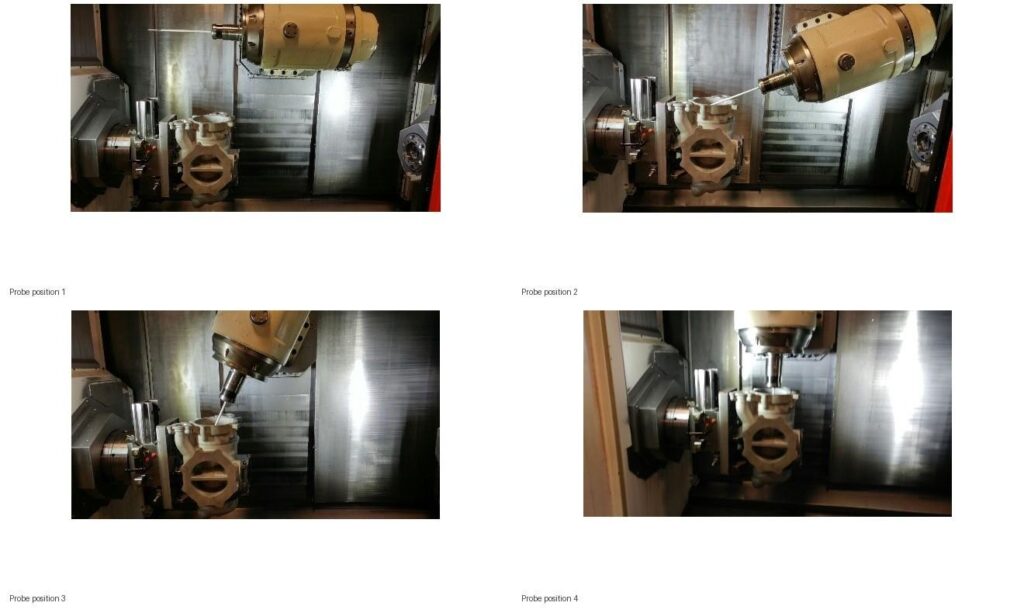
LeanWerks engineered a fixture providing access to five of six faces in one workholding arrangement. Standard- and extended-length probes measured critical datum features while the casting remained secured in the machine.
These measurements established the relationship between the actual casting and the specified finished features, allowing toolpath positioning to account for starting-form variation while preserving all applicable drawing requirements. Adaptive machining does not mean relaxing tolerances or accepting nonconforming parts.
The result: Conforming complex castings machined through a repeatable, single-setup process. The value came not simply from a five-axis machine, but from the fixture, probing strategy, and machining sequence engineered around the component.
Challenge 3: Reducing Material Cost Through Near-Net-Shape Casting
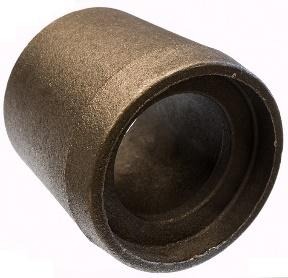
Sometimes the greatest opportunity to improve a machining process occurs before material reaches the CNC machine. LeanWerks encountered this when producing ductile-iron plug valve inserts for high-pressure fluid-control equipment.
The inserts required precision internal diameters, demanding surface finishes, and an O-ring groove on a conical surface. Conventional starting stock was trepanned continuous-cast ductile-iron bar, an unexpectedly costly approach once processing and waste were considered.
The Solution: Rethinking Raw Material and Manufacturing Flow
LeanWerks evaluated the metallurgy and identified a foundry capable of producing near-net-shape ductile-iron castings using in-mold inoculation. Third-party testing validated the material structure and properties. Reduced stock removal also supported more predictable cutting conditions and tool management.
The manufacturing flow was then reorganized around multitasking CNC machining and a lean cell, bringing marking, finishing, and packaging closer to the machining process and reducing unnecessary handling and work in process.
The result: Raw material cost per part fell 66%, with additional improvements in material removal, inventory, handling, and responsiveness. The key was not simply cutting faster; it was eliminating cost and waste across the manufacturing process.
When Machining from Billet Becomes the Better Solution
Castings are not always the most practical production route. Intricate internal passages, challenging casting requirements, or limited foundry availability can make machining from solid stock a viable alternative.
LeanWerks has developed machining processes for complex components with intersecting internal features and extensive dimensional inspection requirements. Such work requires careful sequencing, tool access, fixturing, datum control, and inspection planning. Although billet machining can involve substantially more material removal, it may be preferable when castings are impractical or unavailable.
The objective is not to favor castings or billet, but to develop a conforming, repeatable, economically viable process for the component.
From First Article to Repeatable Production
Across precision machining projects, a successful manufacturing process is more than a CNC program. It combines material selection, workholding, tooling, machining sequence, inspection, and documented process controls.
For recurring programs, these decisions must be maintained so quality does not depend solely on one machinist’s individual judgment. Once a process is stable, teams can systematically improve tool life, cycle time, material utilization, inspection efficiency, and production flow without compromising requirements.
Choosing a Manufacturing Partner for Complex Components
OEMs evaluating suppliers for complex precision components should look beyond equipment lists and initial piece price. A capable partner understands how geometry, material, fixturing, machining methods, and inspection interact—and can translate that understanding into a repeatable production process.
At LeanWerks, we believe great precision machining and manufacturing results come from skilled people developing, executing, and continuously improving great processes. Whether a project starts with a casting, forging, or billet, our objective is consistent conformance and reliable production.
Contact LeanWerks to discuss complex precision machining and long-term production needs.